
The roar of the engines returns to the legendary Shanghai International Circuit, the stage set for what promises to be a breathtaking showdown in the 2026 Formula 1 season. Max Verstappen, the indomitable force behind Red Bull Racing, commands attention once again. Analysts, fans, and rivals alike ask: with the transformative rule changes shaking the sport to its core, is there truly anyone who can challenge Verstappen’s reign? The landscape of Formula 1 is evolving fast, with Mercedes-AMG Petronas, Ferrari, McLaren, and Aston Martin Aramco recalibrating their strategies to seize any opportunity to dethrone the four-time world champion. As Red Bull Racing prepares to unveil their next-generation machinery, and Pirelli’s tires evolve to complement new chassis dynamics, the battle lines are drawn not only on track but in boardrooms and garages worldwide. This is far more than a race; it’s a test of adaptability, resilience, and unyielding ambition at the pinnacle of motorsport.
In a sport where milliseconds can redefine legends, the 2026 season brings the biggest technical upheaval in half a century: a complete overhaul of both chassis and power units. With Red Bull Racing transitioning to an in-house power unit, the dynamics of competition sharpen dramatically. The pressure mounts on Verstappen to not just defend his supremacy but to adapt swiftly to engineering revolutions and intense rivalries. Meanwhile, the Shanghai International Circuit stands as an iconic battleground steeped in history and technical challenges that test every nuance of driver skill and machine excellence. This grand stage will illuminate whether Verstappen’s raw talent and Red Bull’s innovative spirit remain unassailable or if the likes of Mercedes-AMG Petronas and Ferrari will rise to script one of the most thrilling chapters in recent F1 history.
Max Verstappen and Red Bull Racing: The Unbreakable Bond or a Fragile Alliance?
Max Verstappen’s journey with Red Bull Racing has been nothing short of extraordinary, propelling him to four consecutive world championships and embedding his name deeply in F1’s elite circle. His current contract extends until 2028, but whispers of potential upheaval swirl around the paddock as the 2026 technical revolution approaches. Christian Horner, Red Bull’s team principal, emphasizes Verstappen’s commitment to playing out his career with the team, yet he openly acknowledges the presence of performance clauses in Verstappen’s agreement that allow the superstar to reconsider his allegiance if Red Bull falters during the transition.
These contract clauses inject a thrilling uncertainty into the 2026 narrative. They permit Verstappen, at just 27, to exit should the revamped car struggle against powerhouse rivals like Mercedes-AMG Petronas or Ferrari. Horner’s candid insights reveal a candid understanding: “2026 is the biggest rule change in Formula One probably in the last 50 years,” and with so much in flux, predicting superiority is impossible until teams fully grasp new regulations. Verstappen’s decision, therefore, may hinge not purely on loyalty but on strategic career moves—evaluating if Red Bull Racing’s new in-house power unit and revamped chassis can reclaim the throne amid fierce competition.
Such a scenario is reminiscent of Sebastian Vettel’s departure from Red Bull in 2015 following a significant rule shift that triggered Mercedes’ era of dominance. Echoing the lessons from that transition, the team realizes cycles of supremacy ebb and flow, and the priority remains building towards the next winning formula. As Adrian Newey’s exit to Aston Martin Aramco further reshuffles the creative deck, Red Bull must not only innovate but inspire confidence in Verstappen that the team’s future is secure. The tension between past glory and looming uncertainty crafts one of the most compelling storylines entering Shanghai’s 2026 Grand Prix.
- Verstappen’s contract runs until 2028, with exit clauses for performance issues.
- 2026 rule changes introduce simultaneous chassis and power unit transformations.
- Strategic patience likely: Verstappen may wait till 2027 to make a decisive career move.
- Loss of key designer Adrian Newey destabilizes Red Bull innovation pipeline.
- Rival teams like Mercedes-AMG Petronas and Ferrari prepare aggressive responses.
| Team | Recent Changes | 2026 Strategy | Potential Impact on Verstappen |
|---|---|---|---|
| Red Bull Racing | Loss of Adrian Newey; shift to in-house power unit | Complete chassis and power unit redesign | Must secure reliability and performance to keep Verstappen |
| Mercedes-AMG Petronas | Consistent podium contender; strong engineering | Refine hybrid power units; tactical innovation | Viable alternative for Verstappen if Red Bull stumbles |
| Ferrari | Recent reliability struggles, chasing past dominance | Ambitious chassis overhaul; new power unit concepts | Potential surprise contender at Shanghai |
| McLaren | Outpaced Red Bull recently; ongoing rebuild | Incremental upgrades; driver development focus | Challenging Verstappen’s consistency |
| Aston Martin Aramco | Added Adrian Newey; aggressive development | Bold aerodynamic advancements | Emerging dark horse with strategic moves |
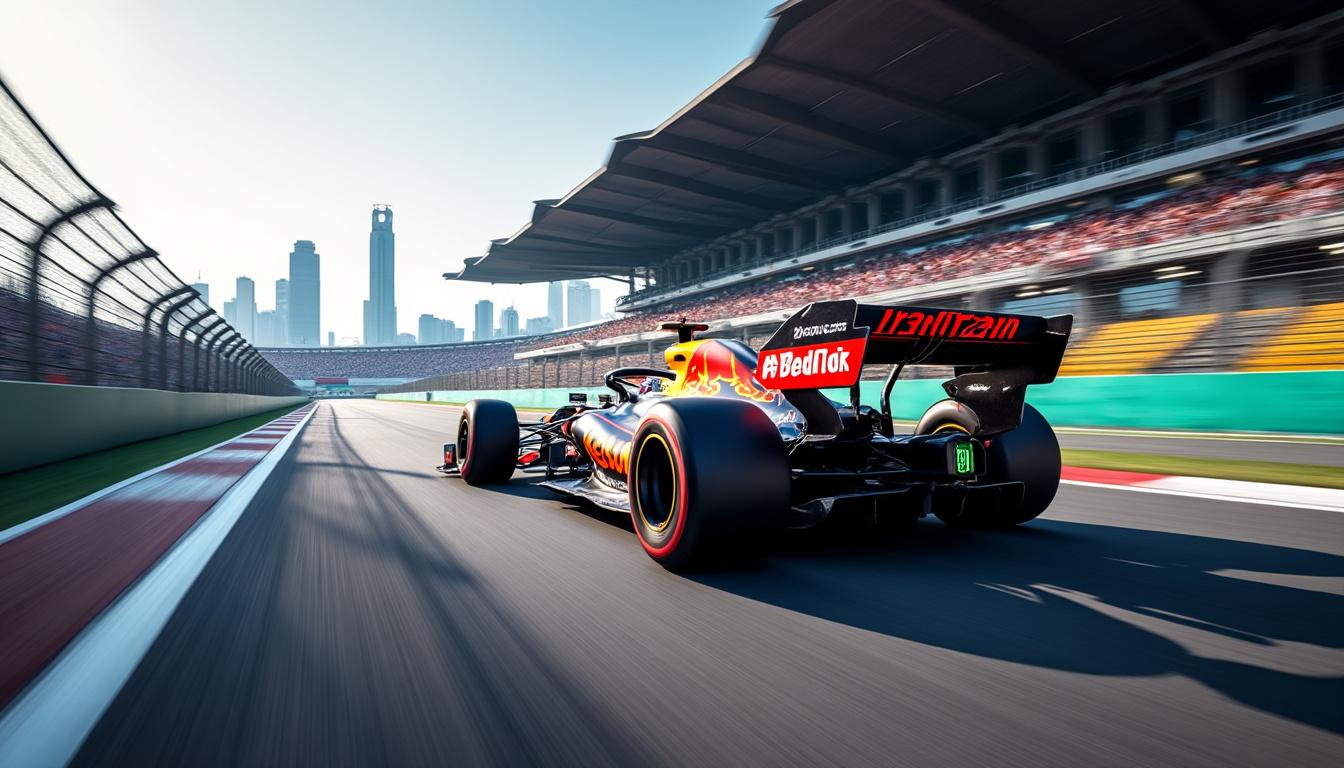


Shanghai International Circuit: A Crucible for Champions and Innovation
The Shanghai International Circuit is more than just a track; it’s a technological and strategic proving ground that separates contenders from pretenders. Its 5.451-kilometer layout, featuring a unique mix of sweeping corners, tight hairpins, and long straights, demands precision, adaptability, and raw speed. For Max Verstappen and the entire grid in 2026, mastering this circuit could be the key to setting the tone for the entire season.
Known for its iconic Turn 1, a challenging long right-hander that tests aerodynamic grip and tire management, Shanghai extracts every ounce of performance from the car and driver. Pirelli’s tire compounds will play a significant role here, as the wear rates and degradation under high load force teams to balance aggression with durability. The 2026 introduction of new tire constructions adds complexity, requiring strategic finesse from teams like Red Bull Racing, Mercedes-AMG Petronas, and Ferrari to optimize pit stop windows and tire allocation.
Strategically, the track is renowned for its potential overtaking spots, yet it demands expert setup choices that blend high-speed efficiency with tire conservation. As Formula 1 integrates its sweeping technical changes for 2026, Shanghai becomes the first major litmus test of how these advanced aerodynamic and powertrain evolutions translate on circuits combining technical corners and high-speed straights.
- 5.451 km circuit with diverse corner types and long straights.
- Turn 1 challenges aerodynamic efficiency and tire wear.
- New Pirelli tire compounds in 2026 altering strategy dynamics.
- Balancing overtaking opportunities with vehicle setup precision.
- First true benchmark for 2026 technical regulation effects.
| Sector | Characteristics | Driver Challenge | Car Setup Focus |
|---|---|---|---|
| Sector 1 | High-speed corners, sweeping curvature | Maintain momentum without tire overheating | Downforce optimization, suspension balance |
| Sector 2 | Technical slow corners, hairpins | Brake modulation and exit traction crucial | Brake cooling, traction control tuning |
| Sector 3 | Long straight, DRS zone | Maximize speed with aerodynamic efficiency | Low drag setup with engine power maximization |


Rivalries Heating Up: Can Mercedes-AMG Petronas or Ferrari Dethrone Verstappen?
Max Verstappen’s dominance has often seemed unassailable, but the spirit of competition burns fiercely behind his every race win. Mercedes-AMG Petronas and Ferrari remain the prime adversaries eager to leverage the 2026 regulations to close the gap. While Red Bull Racing pushes ahead with its new in-house power unit, Mercedes invests heavily in refining its hybrid technology and aerodynamics to reclaim superiority, and Ferrari ambitiously pursues its revolutionary chassis concepts.
Beyond engineering, driver lineups will shape how effectively these teams challenge Verstappen. Mercedes-AMG Petronas boasts a well-balanced roster that mixes tactical wisdom and youthful energy, essential under the immense pressure of the season’s midpoint battles. Meanwhile, Ferrari aims to revive its previous glory with aggressive race strategies supported by TAG Heuer’s telemetry innovations, further narrowing the performance window for Verstappen’s Oracle-powered Red Bull.
McLaren’s recent rapid improvements signal yet another potential disruptor in the fight for podiums. Consistently outpacing Red Bull’s second driver, McLaren has transformed into a formidable challenger able to pressure the championship leader through strategic pit stops and aggressive tire management. Aston Martin Aramco’s recruitment of Adrian Newey adds depth, with their aerodynamics potentially reshaping mid-grid dynamics and challenging traditional powerhouses.
- Mercedes-AMG Petronas focuses on hybrid enhancements and aerodynamic tuning.
- Ferrari’s bold chassis revamp aims to regain competitive edge.
- McLaren challenging Red Bull’s midfield presence and strategic consistency.
- Aston Martin Aramco leverages Newey’s design genius for breakthrough innovation.
- Driver experience and telemetry, tagged by TAG Heuer, critical for tight race battles.
| Team | Driver Lineup | 2026 Technical Focus | Championship Prospects |
|---|---|---|---|
| Mercedes-AMG Petronas | Experienced and youthful blend | Hybrid system upgrade and aero refinements | Strong contender to challenge Verstappen |
| Ferrari | Track-honed aggressive racers | Chassis overhaul and telemetry integration | Potential to disrupt leadership with strategic wins |
| McLaren | Emerging talent with tactical maturity | Incremental performance gains | Dark horse for podium finishes |
| Aston Martin Aramco | Innovative young drivers | Advanced aero package | Wildcard capable of shaking the grid |

Technical Overhaul of Formula 1 in 2026: The Game-Changer for Verstappen and Rivals?
The impending 2026 rewrite of Formula 1’s technical regulations stands as the most sweeping transformation of the sport in decades. Both chassis and power unit architectures are simultaneously redesigned, forcing teams to reinvent their approaches from the ground up. This ushers in uncertainty but also opportunity, as no clear pecking order exists until the new machines hit the track and races unfold.
Red Bull Racing faces a high-stakes challenge: producing a reliable, powerful in-house power unit to defend Verstappen’s crown amidst fierce competition. This is particularly vital as Honda’s exit places additional pressure on Red Bull to innovate internally. Meanwhile, rivals like Mercedes-AMG Petronas polish hybrid efficiencies to maintain their edge, and Ferrari looks to capitalize on their chassis overhaul. The balance between downforce, power delivery, and tire management will dramatically influence race outcomes, especially at complex circuits like the Shanghai International Circuit.
The new regulation spectrum demands careful analysis and risk-taking. Teams must interpret aerodynamic guidelines precisely, exploit permitted technical freedoms, and synchronize driver skill with car potential. Verstappen’s fate thus hinges on Red Bull’s success to translate innovation into consistent lap leadership and strategic mastery. With the season opener fast approaching, all eyes focus on whether Verstappen’s Oracle-backed team can maintain dominance or if the shifting tides will finally enable challengers like Mercedes-AMG Petronas and Ferrari to seize the spotlight.
- Simultaneous chassis and power unit redesign increases competitive unpredictability.
- Red Bull Racing’s in-house power unit is a critical risk and opportunity.
- Technical balance between downforce and power delivery will define race pace.
- Tire strategy with new Pirelli compounds integral to success.
- Driver adaptability and telemetry data from TAG Heuer provide tactical edges.
| Technical Element | 2026 Change | Expected Impact | Team Most Affected |
|---|---|---|---|
| Chassis | Complete redesign for aerodynamic efficiency | Reset performance benchmarks and lap times | All teams, especially Red Bull Racing |
| Power Unit | New hybrid architecture; Red Bull builds in-house unit | Potential reliability challenges; new performance race | Red Bull Racing, Mercedes-AMG Petronas |
| Tires | Pirelli introduces new compounds tuned for 2026 regulations | Revised tire management strategies pivotal | All teams |
| Telemetry | Adoption of TAG Heuer advanced data analytics | Enhanced performance insights and race tactics | Top teams (Red Bull, Mercedes, Ferrari) |


The Road Ahead: Will Verstappen Reign Supreme or Face Unprecedented Challenge?
As the 2026 season unfolds at the Shanghai International Circuit, Max Verstappen’s quest for continued glory will be under immense scrutiny. Despite a challenging 2025 where McLaren often outshined Red Bull’s secondary driver and Verstappen faced setbacks in several Grands Prix, his recent pole position at Silverstone reignited hope. The coming season will test his resilience, adaptability to Red Bull’s new Oracle-powered machinery, and tactical acumen amid revamped competition.
Speculation about Verstappen’s potential team switch lingers, but evidence suggests that patience could be his strongest strategy. Red Bull seems poised to consolidate its next winning cycle, with promising young talents like Arvid Lindblad supporting the team’s future ambitions. Critically, the pressure of 2026’s major regulatory upheaval means that any premature moves could jeopardize championship prospects.
The 2026 puzzle boils down to one question: can Red Bull Racing deliver the package Verstappen needs to dominate again, or will Mercedes-AMG Petronas, Ferrari, or even surging teams like McLaren and Aston Martin Aramco wrest the spotlight away? Fans can stay on top of the action and dive deeper into Verstappen’s Shanghai prospects by clicking here to explore expert analysis and predictions.
- Verstappen’s recent form shows flashes of brilliance despite challenges.
- New Oracle power unit puts Red Bull back in innovation spotlight.
- Young drivers like Arvid Lindblad signal Red Bull’s long-term vision.
- Complex 2026 regulations mean the championship race is wide open.
- Shanghai International Circuit offers a dramatic proving ground to launch 2026 title chase.
| Factor | Current Status | 2026 Outlook | Impact on Verstappen’s Title Chances |
|---|---|---|---|
| Driver Consistency | Occasional setbacks in 2025 | Adapting to new car and rules | Crucial for seamless championship defense |
| Car Reliability | Mid-field struggles in 2025 | Improved with Oracle power unit | Defining factor for race wins |
| Team Strategy | Strong but challenged by rivals | Essential to negotiate new tire management | Can swing race outcomes dramatically |
| Competition Strength | Mercedes-AMG Petronas and Ferrari closing gap | Likely intensified with technical equalization | Measures Verstappen’s dominance |
What makes the 2026 Formula 1 regulations so significant?
The 2026 regulations introduce simultaneous changes to both chassis and power units, representing the biggest transformation in F1 engineering in decades, affecting car design, performance, and competition dynamics.
Why might Max Verstappen consider leaving Red Bull Racing?
Verstappen’s contract includes performance clauses that allow him to leave if Red Bull fails to deliver competitive machinery following the 2026 technical overhaul.
How does the Shanghai International Circuit test drivers and cars?
Its mix of high-speed corners, technical turns, and long straights demands aerodynamic efficiency, tire management, and strategic setups, making it one of the most challenging circuits on the calendar.
Which teams are poised to challenge Verstappen in 2026?
Mercedes-AMG Petronas, Ferrari, McLaren, and Aston Martin Aramco all are innovating aggressively and bolstering their lineups to compete fiercely against Red Bull Racing and Verstappen.
What role does tire strategy play in the 2026 season?
With Pirelli introducing new compounds and changes in car designs, tire wear and management become critical tactical elements that can determine race outcomes.