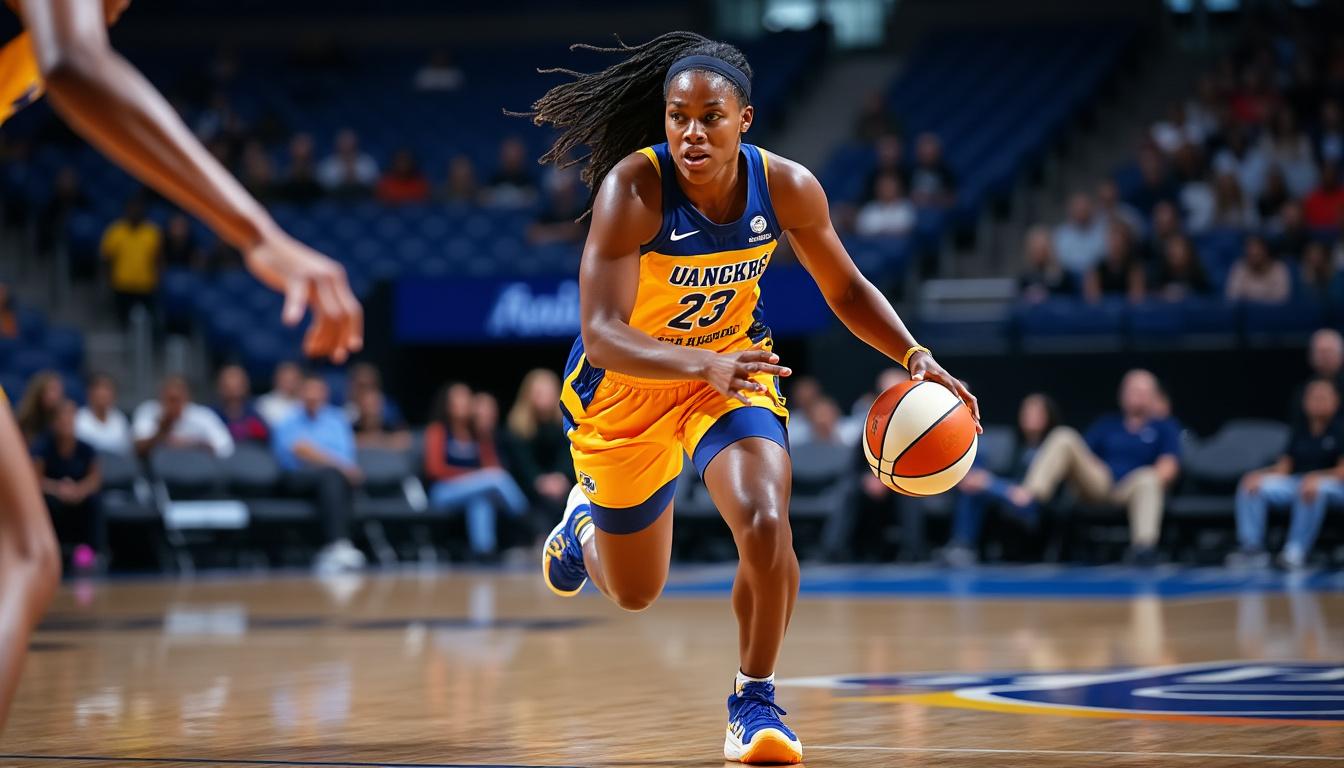
The landscape of women’s basketball is undergoing a seismic shift as Project B announces the signing of Alyssa Thomas, the Phoenix Mercury forward renowned for her triple-double accolades and leadership on the court. This monumental move marks the arrival of another WNBA superstar into the fold of Project B, a new global league that promises to challenge the traditional framework of professional women’s basketball. With Thomas joining Seattle Storm’s Nneka Ogwumike—WNBA Players Association president—in signing deals with this startup, the sport faces an intriguing crossroads packed with potential and controversy alike.
Project B’s inaugural season is anticipated to launch in November 2026, spanning continents from Asia and Europe to Latin America until April 2027, deliberately scheduled just before the WNBA season kicks off each year. This strategic timing underpins the league’s ambition: not merely to coexist but to redefine how elite women’s basketball can flourish on a global scale. The implications of this development ripple far beyond player contracts, stirring questions about league dynamics, competitive balance, and the future economic model of women’s basketball.
Such a pivotal move introduces a fresh narrative into women’s basketball—a narrative teeming with new opportunities, challenges, and a fiercely competitive spirit that galvanizes players and fans alike. As dabbling signs of discontent swirl amid ongoing WNBA collective bargaining agreements, the lure of Project B with its groundbreaking compensation model and global exposure represents both an opportunity and a disruption in equal measure.
Project B’s Bold Entrance into Women’s Basketball: A New Dawn
Project B represents an ambitious, forward-thinking global women’s basketball league designed to revolutionize the sport’s professional scene. Centered on equity and expansive opportunity, the league has rapidly captured the attention of the basketball world by signing top-tier talent such as Alyssa Thomas and Nneka Ogwumike. Their commitments signal a bold statement: the era of limited options and capped salaries for women athletes may be drawing to a close.
The league’s structure is groundbreaking and carefully crafted to maximize competitive and financial opportunities for players. Featuring six teams, each roster will have 11 players, offering a concise yet high-caliber competition platform. The season schedule avoids conflict with the WNBA, running from November through April, allowing players to maintain their presence in both ecosystems.
What truly sets Project B apart is its unprecedented pay scale. Starting salaries reportedly hit seven figures, with multi-year contracts potentially touching eight figures—monetary rewards dwarfing those currently offered by the WNBA, where supermax contracts peak near $250,000. Such figures ignite the possibility for players to enjoy lucrative careers without needing overseas offseason stints, which have been a longstanding necessity in women’s basketball for financial viability.
- International footprint: Season spans Asia, Europe, and Latin America for global visibility.
- Six-team league: Compact structure fostering intense competition.
- Enhanced player salaries: Starting at $2 million, significantly surpassing WNBA offerings.
- Player equity: Athletes receive ownership stakes, empowering their role beyond the court.
- Noble timing: Seasonal overlap designed not to interfere with traditional WNBA calendar.
| Feature | Project B | WNBA |
|---|---|---|
| Teams | 6 | 12 |
| Roster size | 11 players per team | 12-15 players per team |
| Season duration | Nov – Apr | May – Sept |
| Starting salary | $2 million+ | Up to $250,000 (supermax) |
| Player ownership | Yes | No |
With such a daring approach to business and player relations, Project B stakes a claim as a future powerhouse in the women’s basketball cosmos.
Alyssa Thomas: A Game-Changer Joins the Revolution in Women’s Basketball
Alyssa Thomas’s signing with Project B reverberates loudly across the WNBA universe. A formidable Phoenix Mercury forward, Thomas has built a reputation for tenacious defense, unyielding effort, and the rare ability to notch triple-doubles, a testament to her all-around game. Her impact extends beyond statistics; she embodies leadership and professionalism, qualities Project B’s Chief Basketball Officer Alana Beard lauded as foundational for the league’s new player-partner era.
Thomas’s decision to join Project B speaks volumes about player priorities in this modern age of women’s sports. Having spent 11 seasons with the Connecticut Sun and leading them to multiple WNBA Finals appearances, alongside five All-Star selections, she is no stranger to the grind of a demanding schedule. Her offseason ventures have previously included international play and time with emerging domestic leagues such as Unrivaled, but Project B’s expansive vision and lucrative offer present an entirely new frontier.
- Career highlights: 5-time All-Star, WNBA Finals leader, triple-double leader.
- Leadership role: Respected veteran elevating team culture and competitiveness.
- Global ambassador: Poised to boost women’s basketball visibility worldwide.
- Compensation upgrade: From overseas offseasons to significant multi-million deals.
- Player collaboration: Part of shifting power dynamics—players gaining equity stakes.
| Aspect | WNBA Career | Project B Impact |
|---|---|---|
| Seasons Played | 11 seasons | Inaugural participant |
| All-Star Selections | 5 | Building new legacy |
| Role | Team leader and primary forward | Global league pioneer and key player |
| Contract Value | Up to $250,000 per season | Starting at $2 million+ |
| Offseason activity | Previously overseas and Unrivaled | Project B full commitment |
Her signing is not merely a player transfer; it is a powerful statement of evolution in women’s basketball, signaling a fresh era where athlete agency and rewarding contracts become the norm rather than the exception.
Project B’s Impact on the WNBA and the Global Women’s Basketball Ecosystem
The emergence of Project B introduces a new dynamic into the balance of power in women’s basketball. While heralded for its innovation, it poses potential challenges to the established WNBA, especially amid ongoing collective bargaining agreement (CBA) discussions. The WNBA and its players’ union have been negotiating crucial terms on salary enhancements and revenue sharing, placing player compensation at the negotiation’s core amidst growing fan demands and public scrutiny.
Project B’s entry complicates this landscape. With players like Thomas and Ogwumike opting for higher salaries and equity stakes overseas, the WNBA faces intensified pressure to elevate its economic model or risk losing more elite talent. Fans and insiders alike watch closely, as the traditional American league must reconcile its legacy with emergent global opportunities.
- Increased player leverage: High-paying global leagues shift player bargaining power.
- Fan engagement: New competitions stimulate excitement but split viewership attention.
- Scheduling conflicts: Overlapping offseason commitments may cause fatigue and player burnout.
- Economic pressure: WNBA urged to revisit salary structures and revenue shares.
- Global reach expansion: New league extends women’s basketball into untouched markets.
| Factor | Potential Positive | Potential Challenge |
|---|---|---|
| Player Salaries | Higher salaried athletes attract international talent | Risk of WNBA losing key players and fanbase |
| League Schedule | Non-conflicting seasons preserve player participation in both | Overlap with offseason commitments like Unrivaled could cause fatigue |
| Fan Interest | Broader global audience engagement | Possible fragmentation of traditional WNBA viewership |
| Revenue Distribution | New models offering player equity stakes | Pressure on WNBA to reform revenue sharing |
| Market Expansion | Access to new continents and fans | Intense global competition for sponsorships |
At the heart of these issues lies a compelling debate: can the WNBA adapt to this bold new ecosystem or will it be forced to downscale in the face of rising global competition? The answers will shape women’s basketball for decades to come, influencing not only player careers but also fan experience and sponsorship traction worldwide.
New Horizons: How Project B Could Reshape Player Careers and Women’s Basketball Culture
The advent of Project B introduces transformative possibilities for women’s basketball players seeking not only financial reward but also a sense of ownership and global influence. Unlike traditional models where players earn fixed salaries and have limited input beyond the court, Project B promises a stake in the league’s growth, changing the dynamics from athletes being mere employees to genuine partners.
This model empowers stars like Alyssa Thomas to envision longer careers rich in opportunity and leadership beyond gameplay. An equity stake means players can share in the league’s success, aligning their incentives with business growth and fan community engagement.
- Career longevity: Improved salaries reduce financial pressure to overplay, enabling healthier career spans.
- Player empowerment: Equity stakes enhance voice in league decisions and conditions.
- Global exposure: International games expose players to diverse markets, expanding fanbases.
- Economic diversity: Multi-million dollar deals shift economic landscapes of women’s sports.
- Community building: Players become ambassadors promoting equity and integrity across borders.
| Aspect | Traditional WNBA Model | Project B Model |
|---|---|---|
| Salary Structure | Seasonal fixed salary, capped by supermax contracts | Multi-year contracts with seven to eight-figure earnings |
| Player Influence | Limited to union negotiations | Stakeholder involvement and league ownership |
| Global Play | In-season, primarily U.S.-focused with overseas offseasons | Primary season across multiple continents |
| Offseason Activity | Often overseas leagues for financial reasons | Project B as premier offseason league opportunity |
| Market Impact | Restricted to North American market | Expands basketball’s footprint worldwide |
Such structural shifts could spawn new role models, increase the sport’s appeal to younger generations, and inspire more investment in women’s basketball infrastructure globally. With players increasingly viewed as stakeholders, the culture of the sport may evolve towards heightened professionalism, equity, and sustainability.


Challenges and Questions: What Lies Ahead for WNBA After Project B’s Emergence?
While Project B’s rise offers thrilling prospects, it also introduces complex questions about the future of women’s basketball, particularly regarding the WNBA’s position as the sport’s flagship league in the United States. The league and its players’ union extend their CBA talks into 2026 with the looming need for a transformative agreement addressing pay, revenue sharing, and working conditions.
Project B’s allure may complicate these negotiations, as players gain leverage through alternative lucrative opportunities. This could lead to a reevaluation of how the WNBA structures contracts, attracts sponsorships, and maintains fan loyalty amidst increasing competition from a global stage.
- Labor negotiations: How will WNBA respond to demands shaped by Project B’s salary benchmarks?
- Player retention: Will the WNBA sustain its talent pool or struggle with transfers?
- Sponsorship dynamics: Can WNBA secure investments to compete financially with Project B?
- Fan loyalty: How will fans balance allegiance between leagues?
- Growth strategies: Will WNBA innovate to preserve and expand its market presence?
| Key Issues | Current Situation | Potential Future Scenario |
|---|---|---|
| Salary Competitiveness | Lower compared to Project B offers | WNBA increases salaries and benefits |
| League Popularity | Growing yet challenged by new leagues | Possible fragmentation of fan base |
| Union Negotiations | Extended CBA talks ongoing | Pressure for historic player-centric reforms |
| International Presence | Strong domestic focus | Potential alliances or competition with global leagues |
| Player Career Choices | Mix of WNBA and overseas plays | More opting for global multi-season play |
The WNBA’s ability to navigate this evolving environment will be crucial to maintaining its stature, relevance, and impact. Strategic recalibration, player collaboration, and fan engagement will determine whether it emerges stronger or faces unprecedented challenges.
What is Project B?
Project B is a new global women’s basketball league launching in late 2026 featuring six teams, offering players high salaries and equity stakes.
Why did Alyssa Thomas sign with Project B?
She signed because Project B offers significantly higher salaries, player ownership stakes, and global exposure, representing better financial and professional opportunities.
How does Project B affect the WNBA?
Project B introduces competition that may challenge WNBA’s talent retention and intensifies pressure on the league’s ongoing labor negotiations.
Will Project B conflict with the WNBA season?
No, Project B’s season is scheduled from November to April, offsetting the WNBA’s May to September season to avoid direct conflicts.
What does Project B mean for the future of women’s basketball?
Project B could reshape player careers, introduce higher pay standards, and expand the global footprint of women’s basketball, forcing existing leagues to adapt.